
As part of our DigInclude project, we have initiated exciting club discussions, which have now become quite a tradition. Our first discussion was an introduction to the digital society, Artificial Intelligence and the changing world, with the help of four knowledgeable panellists and a moderator. In this article we want to present the general view of the panel. But first, let’s take a look at the background.
What do we mean by digital society?
Digital age. For decades it has framed the opportunities, constraints and processes of our society. When the pandemic broke out (Covid 19), we suddenly had no choice: technology ceased to exist as a digital alternative and became an indispensable, everyday resource on which we have relied heavily ever since.
New technologies?
The world, our digital world, is changing quite rapidly. New technologies and digital solutions are emerging, and it’s getting harder and harder to keep up. One of the technologies that has recently caused a stir is Artificial Intelligence (AI). But what is it? The European Parliament’s official definition of AI is: “Artificial Intelligence (AI) refers to the human-like abilities of machines, such as reasoning, learning, planning and creativity. It allows technology to sense its environment, deal with what it perceives, solve problems and plan its actions to achieve a specific goal. The computer not only receives data (already prepared or collected through its sensors, such as its camera), but also processes and reacts to it.
These systems are also capable of modifying their behaviour to some extent, by analysing the effects of their previous actions and working autonomously.”
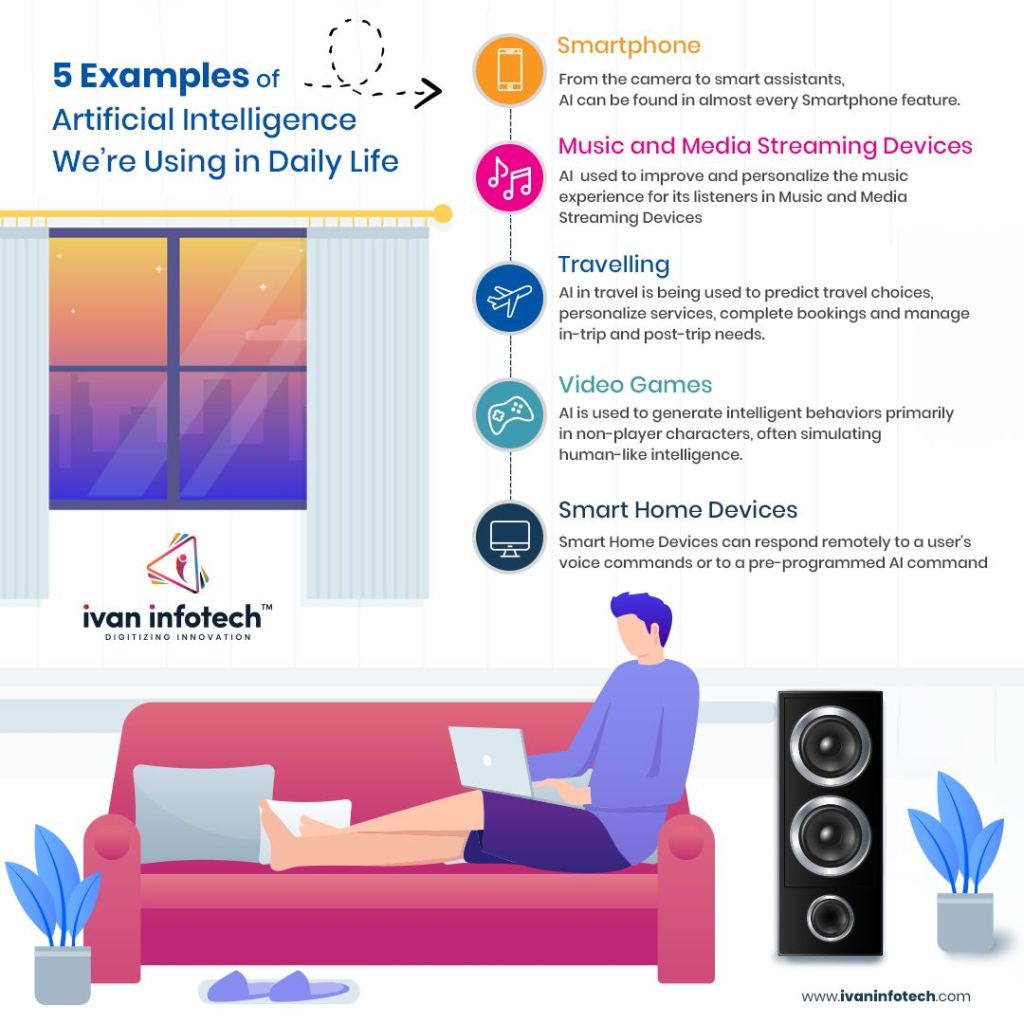
It’s worth pausing for a moment to think about the areas of life where we use AI – it may feel new, but it’s been with us for decades!
Here are some of its uses:
- Online shopping and advertising
- For example, for some online shopping and advertising
- Digital personal assistants
- Machine translation
- Smart homes, cities and infrastructure
- Smart cars
- Cybersecurity
- Artificial Intelligence against Covid19
- Fight against misinformation
As mentioned above, this is an extremely fast-growing area. ChatGPT is only a few months old, and János Levendovszky, Vice-Rector for Science and Innovation at BME (Budapest University of Technologies and Economics) and internationally recognised expert in the field of Artificial Intelligence, defines it succinctly: “ChatGPT is what everyone is talking about today.”
According to Hekate’s enhanced definition of ChatpGPT, ChatGPT is what every individual, community and society should be talking about – because understanding it is very important to see not only its potential but also its threats.
But to give a more professional view on this much discussed topic, we call on számoldki.hu:
“ChatGPT is a language model created by OpenAI. AI-based language models learn from textual data and are able to answer questions posed by users. ChatGPT is based on the GPT (Generative Pre-trained Transformer) algorithm.”
We don’t necessarily need to understand the technological details, but it is important to remember that AI, ChatGPT and its nascent counterparts are extremely complex technologies that offer huge potential but also serious risks.
Personal opinion of the panel
We would like to present the views of the panellists – with the comment that their views may have changed to some extent since the event. We asked the following question:
What are your personal feelings and thoughts about the digital society and artificial intelligence?
We received the answers below.
Antal Károlyi – Head of SignCoders, a development company that works with young people with hearing impairments. He has been an investor and entrepreneur in the startup world for the last 10-12 years and brings experience in computer algorithm development.
“I’m starting from where this event itself probably came from: a couple of months ago I was scared when ChatGPT came out. I started looking at it, and then, to put it in technical terms… I freaked out. Never before in the digital world had I been scared by any technology, and this was the first time that I was touched by how human it was, or at least the feeling that the tool itself gave me, how professional it was… I wrote poetry with it in English and in Hungarian and whatnot, and so it was like, okay, maybe I wrote a good poem in Hungarian, but I’m not sure in English. So I had a feeling that wow, and I have very mixed feelings about it: on the one hand I think it’s very exciting and we’re using it within the team, so we’re already taking advantage of it, but on the other hand I have a fear, which I say, I’ve never had before, of whether I can keep up cognitively and emotionally with this technology.”
Miléna Milánkovics – co-founder of Hekate Conscious Ageing Foundation. Prior to this social enterprise, she spent almost 20 years in the IT field, mainly working in corporate IT, and this interest has remained.
“I think I’m basically very optimistic and very enthusiastic, I see this as crazy exciting. I’m a big believer in digital at the outset and I see this as a new opportunity opening up. In the meantime, I know, and my focus is there, how to do this in a way that is prepared for the downsides and that is mindful, ethical and inclusive. So that the solutions are mainly ethically sound. In the meantime, I think it raises a lot of social question marks. Today it can be a solution to many problems, for example by promoting a more impulsive health care – so I see the potential for it in many areas where it can bring good, quick and pragmatic solutions. I prefer to look at in this way. In the meantime, I sense that I have this existential fear, so in the meantime I have this fear of where the machines will be, when the algorithm will be my boss and not me. So I have this kind of cautiousness, but basically I live in this optimistic spirit: let’s see what we can use it for approach. I often look and find analogies with the “internet”, and I would like to think a little bit that if we think about this a little bit more now, and we’re a little bit more prepared in terms of the lessons of the internet, and using them, then maybe we can use this in a more ethical and fair way in the future.”
Nóra Taliga – Digital wellbeing trainer/expert. She’s strengthening the international pillar of Hekate Conscious Ageing Foundation. She works in a technical support role for an international company, so she’s in contact with end users every day, who are struggling with all sorts of systems. She also delivers training courses internationally, with a focus on digital wellbeing.
“I guess I’m less optimistic… I don’t have a huge pessimism about the whole thing, but I have very mixed feelings, I’ll be honest. And I’m not just talking about Artificial Intelligence here, but as a digital society in principle, as just a starting topic. I think that it is not a black and white story, that there are a lot of good things about technology and a lot of bad things. I am obviously talking here about the many advantages that we enjoy every day… I am thinking here, for example, of the fact that we can break down national borders by living in a digital society, that the labour market is opening up, and that there is actually a huge store of knowledge and information available to everyone – in theory. There is Artificial Intelligence as an opportunity, with a huge potential to develop a lot of areas, for example medicine, diagnostics, where we are already applying them. Which is a brilliant thing, so that part of it obviously excites me and gives me hope and that’s the optimistic side of it. And then there’s the side that there are a lot of dangers and a lot of disadvantages that technology can bring. And then obviously I’m considering how accessible it really is for everyone. So it’s one thing that it’s there, but can everyone really take advantage of it? Do we have the competence to really use this digital society? Obviously the whole story raises questions about where the power is in all this. So it’s in what hands XY technology is in that determines what the product itself is. At least that is my personal opinion. And then that’s something that can generate a lot of other things, can generate that, and what we see every day is that there are divisions, social divisions, that there are social barriers, that there is polarization, that there is really not everybody having access to the internet… So yes, there are a lot of dangers, and so I experience it more as a kind of strong fear.”
Levente Pártovics – IT specialist, cloud solution architect.He has worked for 27 years in the IT field at Stephens Luxembourg in various positions, including software developer. He is currently working on the design of cloud-based systems. Artificial Intelligence is not his area of expertise, just a frontier he sometimes encounters in his work.
“I would also like to relate a little bit to Antal and Nora. I have mixed feelings about it, so from a professional point of view it’s an incredibly exciting area, both in the digital society and in the field of Artificial Intelligence. If you look at how much it has developed over the last 30 or 40 years and how it has been integrated into our lives, I think it is a fantastic thing and it has a lot of potential. We have talked about a lot of the dangers in the digital society area. Again, I would not go into it in depth, but I would highlight two things. The thing that has been happening so far is that our virtual identity is coming to the fore instead of our real identity, and this illusory identity is becoming important. The other is the mass manipulation that we saw, for example, in the US elections, how many millions of people could be ‘surprised’ by social media – that’s the negative side of the digital society. As far as Artificial Intelligence is concerned, you can look back over the last 20 years, where you can see how it has developed. Huge opportunities – as has been said – this could be a lot of things. I see two areas here that are, let’s say, more on the negative side: one is that deep learning technology is coming to the fore, where people have less and less control over exactly how this knowledge is incorporated into Artificial Intelligence, so it’s very difficult to control what comes out of it. The other thing is that I’m not afraid to use AI: I’m afraid of the people who get their hands on AI as a technology, what do they do with it? So I’m thinking a little bit about nuclear power as an analogy, again it could be used for nuclear power plants and nuclear bomb making, and well I have a moderate amount of faith in human wisdom, as we’ve seen over the last few decades, the negative side has come out quite strongly, so both of these things I really have this mixed, a lot of positives and a lot of strong negatives that I see about them.”
Kinga Milánkovics – Co-founder of Conscious Ageing. She has a “pig-like” approach to IT: she was involved in the installation of one of the first web servers at the University of Gödöllő (Hungary), and was a system administrator at the Tempus Public Foundation for 20 years. He has an affinity with the subject, but has moved into a different field: she works on ageing and community development: she is very interested in digital solutions, how those can help individuals and communities, and what this can mean for elderly care (as she is an elderly care worker herself).
“I’m a community developer, I would say now on a personal note how I feel about it, what I think. Back when I started my job, there was no social media, it was really just email we had. So it’s an absolute revelation to me on a daily basis how much we have tools that allow us to work on a whole different level, a whole different level of effectiveness than we used to, and I still love it to this day. As regards the dangers you mentioned, I agree completely, on the one hand, and on the other, I have become quite fatalistic over the last ten years, so I think that this genie is now completely out of the bottle. I have some anxieties about that, but I’m more like, there’s not that much we can do about it now. I think, I do not think I am right, because I am not an IT specialist, but I have this “let it go a little” on a feeling level, and what has started to interest me in connection with this is exactly what Levente said, about the power that will be in the hands of which people. The question of what kind of exit strategy we need to prepare. I really like all these new technologies and applications and everything, but I’m increasingly concerned about how you can chose to stay out of all this, and – which was the idea behind this event – whether you’re left out. Where can this be, even as an ageing person – and this is even more interesting from the point of view of young people, because they are likely to have more time ahead of them – but how can a 50-60-70 year old person determine their presence in the digital space, or what applications they should or are willing to learn, what are important. This is a topic that I’m very interested in, how to calibrate that for myself so that if it gets into the hands of very bad people and it becomes very controlling, then what kind of digital-free life can you live at all in terms of opting out. These are issues that I’m very concerned about.”
What do YOU think? Is technology a blessing or a curse? What are YOUR personal feelings and thoughts about the digital society and Artificial Intelligence? We encourage you to do some reflecting. We’d love to hear what you come up with! 🙂
The club discussion that inspired this article was co-funded by the European Union in the framework of our Erasmus+ project, “DigInclude – Developing Digital Skills in Disadvantaged Groups”.


 Hekate