Identity, equity, inclusion – a quick personal guide for self-reflection

Identity, equity and inclusion are some of those big concepts that are not the easiest to grasp. We hear these all the time, we might have learned about these in school, we might be given courses about these at our workplaces, yet these might mean something different to each one of us. With this interactive, self-reflection based course our partners in our DigInclude project, SignCoders, aimed to guide individuals of all backgrounds through a quick discovery of the basics of these – on a personal level. What topics and questions are they posing? Take a look:

  • Understanding our identities
  • Social diversity
  • Inclusive workforce
  • Disability and social discrimination (based on disability)
  • Neurodiversity
  • Perception of disability
  • Discrimination
  • Inclusion, disability inclusion, workplace inclusion
  • Equality vs Equity 
  • Social innovation

Download the guide in English or in Hungarian. 

Would you like to take this course while reflecting on this with people of similar interests yet different perspectives? Let us invite you then to our Digital Learning Hub, our free forum to discussions, co-learning, and discovering around specific topics. A simple registration and you’re in! 

This DigInclude is a joint project of SignCoders and the Hekate Ageing Conscious Foundation. We work together to develop digital skills in communities of disadvantaged people. The project has the following main objectives:

  •     Building Hungarian and Dutch communities, long-term community learning and progressive online community spaces in the context of adult education.
  •  Training young people with disabilities and disadvantages in digital skills, digital literacy and digital well-being, and supporting their successful employment in the digital world.

Quick to learn Digital Professions aka the basics of Digital Career 

We live our life in a digital age with tons of activities we perform online, from communication, through studies till banking and administration. For many of us, a great part of our works are online, too. But not for all of us, and not entirely. There are several job opportunities out there that are specifically based on the use of computer technologies and allow people to build a digital career. But what are these opportunities? Where can one start? What to look out for?

These are some of the questions that this interactive guide, created by the team of SignCoders, in the framework of our cooperation project called DigInclude, aims to discover. 

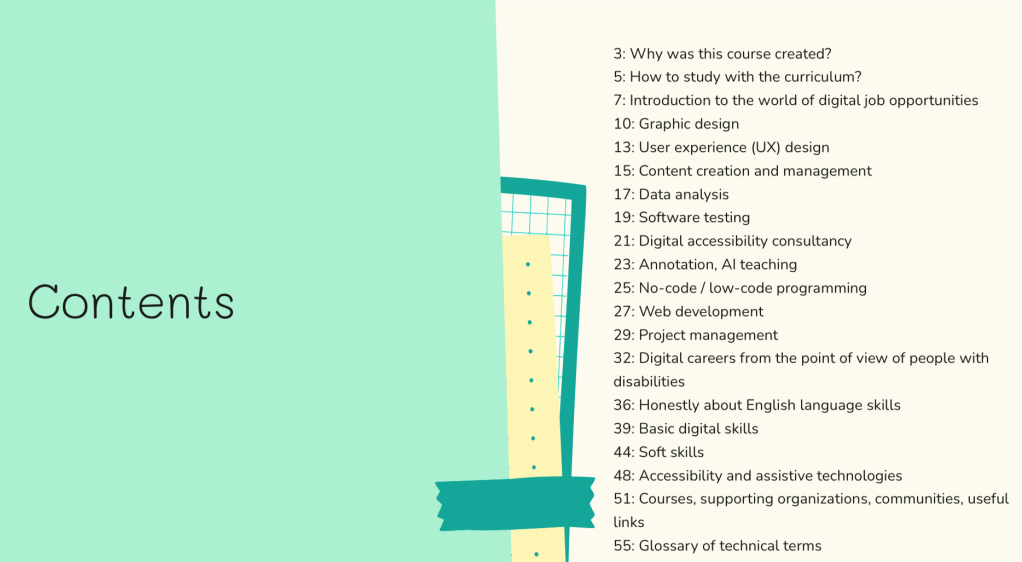
The specific topics of the curriculum are the following:

Download the guide from in English or in Hungarian:

Would you like to take this course while reflecting on this with people of similar interests yet different perspectives? Let us invite you then to our Digital Learning Hub, our free forum to discussions, co-learning, and discovering around specific topics. A simple registration and you’re in!

The course was born as part of the Erasmus+ project “DigInclude – Developing Digital Skills in Disadvantaged Groups” and co-funded by the European Commission.

How to support mental health with (social) permaculture (online event)

We are currently facing turbulent times marked by numerous crises, including those related to care, climate, housing, ecology, and mental health.Continue reading “How to support mental health with (social) permaculture (online event)”

Hekate Garden in Janoshida, Hungary

Our foundation and the Municipality of Janoshida (in Hungary) started a strategic cooperation in 2020. It is a complex, care and permaculture-based village development process. The title of the cooperation is JANOSHIDA2030 (see link for more info).

Part of this cooperation is the development of an educational and community space for promoting (social) permaculture as well as conscious/active ageing. It is called Hekate Garden, and we established it in 2023. Trainings, workshops and community events are going to start in 2024. You are welcome to sign up for updates about events at the bottom of this page.

For pictures of the garden, click on this one:

Redefine Ageing with Unfolding – Your Journey to Conscious Ageing

Embark on a transformative journey where you’ll explore new paths to design your landscape of conscious, active and meaningful ageing.

From the moment of our birth, we are in the process of ageing. The UnfOlding program is dedicated to shaping the second half of life, embracing and nourishing the knowledge, wisdom, and resources acquired in the first half.

  • Are you 45 or older and seeking an active, healthy, and conscious approach to ageing?
  • Ready to take responsibility for your ageing process, confronting potential fears and anxieties?
  • Do you wish to explore new narratives and experiment with new alternatives?
  • Are you looking to integrate conscious ageing into your personal journey or into your community, yet uncertain about where to begin?

Join UnfOlding! Explore, connect and learn as you navigate this transformative journey.

During the program you will:

  • Explore the main aspects of Conscious Ageing, enabling you to make conscious and informed choices regarding:
    • Your life’s mission and the activities that enable you to live a purposeful life at any age
    • Your social connections that provide the feeling of belonging and involvement
    • Your never-ending self-development and your lifelong journey of learning
    • Your housing and living situation shaping your level of autonomy at old age
    • Your financial sustainability going far beyond your income and savings
    • Your physical and mental health throughout the course of your life
    • Your relationship with spirituality
    • Your end of life and death
  • Learn how the different aspects of life impact your ageing, and your activeness and autonomy at an older age.
  • Reflect on your unique ageing journey, delve into your inner world and deeply consider what you wish to unfold in the second half of your life.
  • Design and carry out concrete actions.
  • Connect with and get inspired by other consciously ageing individuals across Europe.
  • Have access to our online community platform and the UnfOlding knowledge base.

Your journey continues between the sessions with inspiring assignments, videos, and reading materials/suggestions.

By the end of the journey you will have:

  • Discovered all of the different aspects of Conscious Ageing and how they shape the quality of life at every life phase.
  • Gained a broader and deeper understanding of both the positive and challenging impacts of ageing
  • Created an authentic self-narrative of ageing
  • Received various tools to adjust your conscious ageing journey at any phase of your life
  • Had the support of the conscious ageing community and its shared experience and knowledge

Program overview:

11 live online sessions, each 3 hours long, on Thursdays from 16.00H-19.00H (CET).

  1. Introduction; (14th of March 2024)
  2. A Purposeful Life: Paid and Unpaid Activities; (28th of March 2024)
  3. Nurturing mental health; (18th of April 2024)
  4. Social Network, Meaningful Connections; (9th of May 2024)
  5. Self-Development and Lifelong Learning; (30th of May 2024)
  6. Housing and living; (20th of June 2024)
  7. Financial sustainability; (29th of August 2024)
  8. Nurturing Physical Health; (19th of September 2024)
  9. Spirituality; (10th of October 2024)
  10. Reflections on Approaching the End of Life and Death; (7th of November 2024)
  11. Celebration of life, 28th of November 2024

Can’t participate in all live sessions? Each session is recorded and available until the next.

Undecided about joining the program now? Pre-register for Autumn 2024 to receive direct updates and stay informed: Pre-registration

Language: English*

*If you’re hesitating to join UnfOlding because of language concerns, don’t let it hold you back. We understand that English may not be the first language for many in our community. We invite you to reach out and explore how we can address this together.

What participants are saying about the program:

“New insights, beautiful encounters, and the feeling that I still have a lot to look forward to as I age. The sessions are very informative and have broadened my perspective on aging. Sometimes, it’s also confronting because there’s still work for me to do, but that also energizes me.”

“It makes me reflect on the whole topic of conscious ageing which is so much deeper than I was willing to dig for, and it’s a lot more fun to share experiences in a circle of fellow seekers.”

“Thanks to UnfOlding, I find myself naturally incorporating its valuable insights into my conversations and coaching sessions. It’s become an essential part of how I approach ageing.”

“It has helped me in my transition into retirement, addressing very relevant and timely topics in the company of fellow participants who are each exploring their own aging journey. Its enriching to experience their different perspectives.”

Price of the full program: 650 €, covering

  • 11×3 hours Conscious Ageing sessions
  • Assignments between the sessions
  • Downloadable handouts to guide your journey
  • Access to the UnfOlding knowledge base on the online platform
  • Access to the private online learning community

The program fee helps us advance the Conscious Ageing concept within disadvantaged communities.

Meet your guide on the journey:

Milena Milankovics

My journey into conscious ageing commenced in my early 40s when I realized the finite nature of my lifetime. Rather than merely pursuing a comfortable existence, I embarked on a quest for a purposeful life. Some may label it a midlife crisis, but I prefer to call it a midlife change.

At that juncture, I found myself at a crossroads. While uncertain about the exact life I desired, I was acutely aware of what I didn’t want. Surprisingly, I struggled to identify role models who had navigated conscious choices for active and purposeful ageing. This realization coincided with an increased awareness of the extraordinary challenges confronting our generation—climate change, demographic shifts, social transformations, economic fluctuations, and an ongoing technological revolution (this was well before the advent of COVID and AI). Challenges the generations before us never had to navigate.

As I delved deeper into the subject, absorbing literature and insights, my initial confusion and sense of powerlessness transformed into creative energy, inspiration, and a resolute determination to shape and share a different narrative of ageing. A narrative centred around conscious ageing and the pursuit of an active, healthy, and purposeful life.

Over the years, Conscious Ageing has evolved into the central focus of my life and professional endeavours. As a Gestalt therapist, co-founder of the Hekate Conscious Ageing Foundation, and social entrepreneur, I’ve dedicated myself to this transformative journey.

In the UnfOlding program, I’ve distilled the essence of my learnings from the vibrant Conscious Ageing community across Europe, my therapeutic clients, extensive literature, and insights from experts and researchers.

I look forward to embarking on this journey of conscious ageing together. I am excited to guide and learn alongside you!

More about Milena 

Let your UnfOlding conscious ageing journey begin! Register now!

This program is licensed under the registered trademark of Conscious Ageing and forms an integral part of the activities conducted by the Hekate Conscious Ageing Foundation.


Empowering through training: bridging the digital gaps with the UnfOlding project 

In our rapidly advancing digital age, where technology permeates nearly every aspect of our lives, it is crucial to address the digital divide that persists among vulnerable and/or ageing adults. As the world becomes increasingly interconnected through digital platforms, those who are not digitally literate risk being left behind.
It is also important to recognise that people living in precarious economic conditions and under heavy care loads have extremely limited time and energy to participate in any kind of training that is not directly related with their everyday economic survival. Therefore any programme aiming to deliver social inclusion of vulnerable adults must be able to address this issue.

The Significance of Digital Inclusion

Continue reading “Empowering through training: bridging the digital gaps with the UnfOlding project “

How to be really inclusive? The learning from an inclusive workshop on inclusivity…

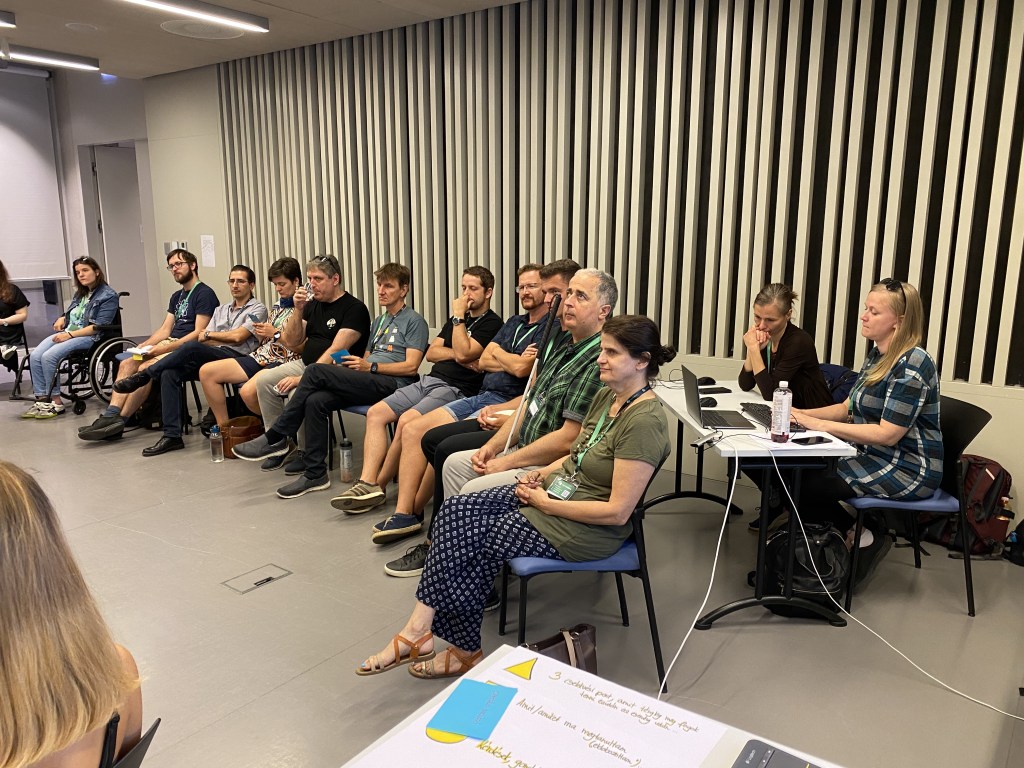
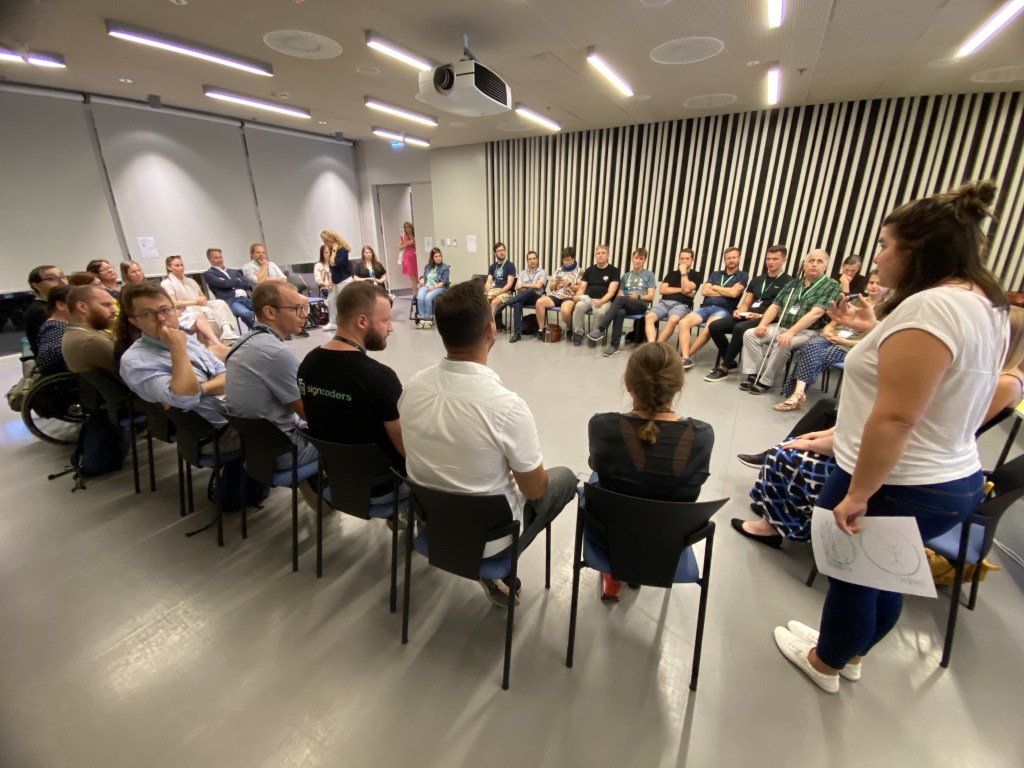
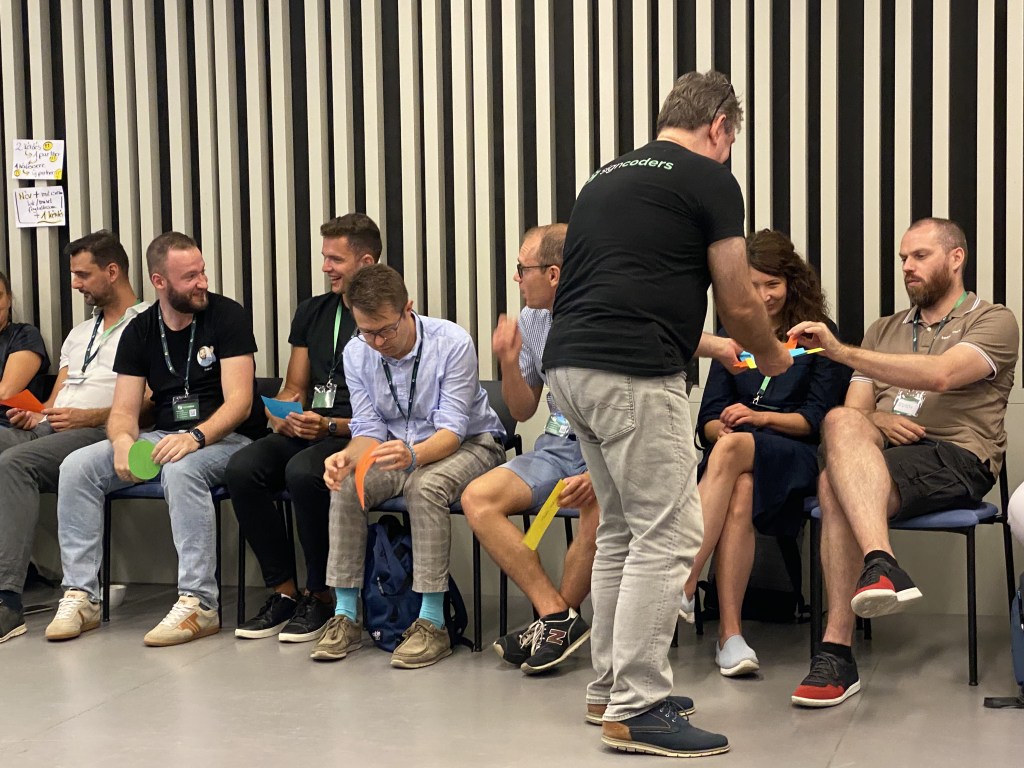
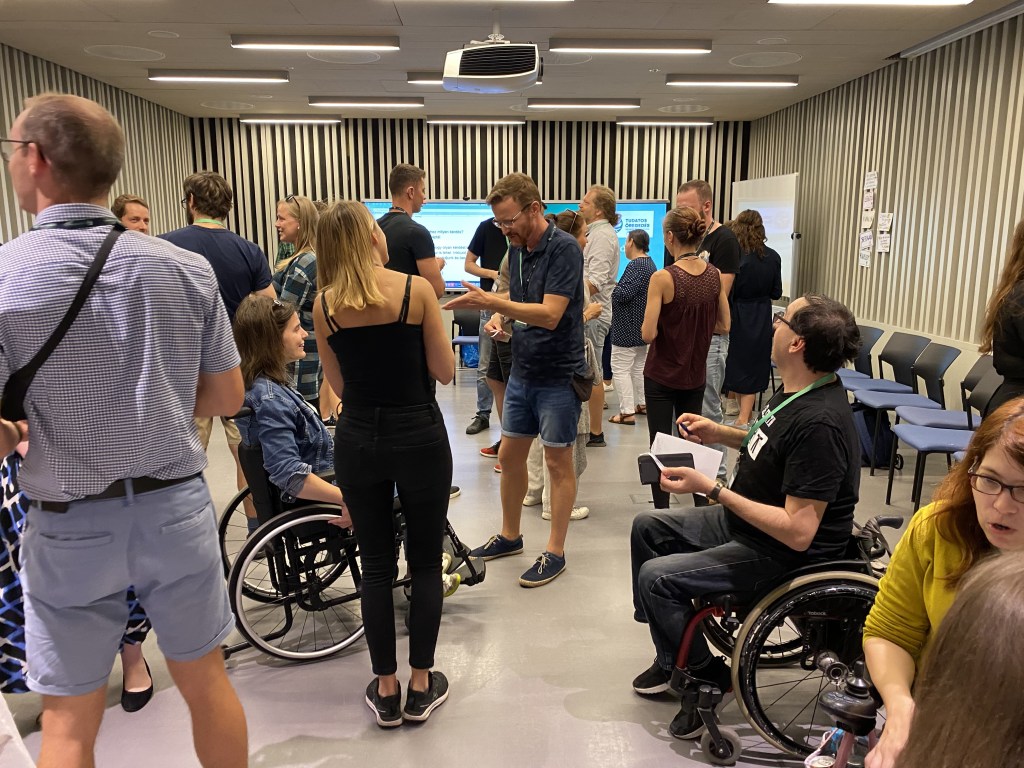
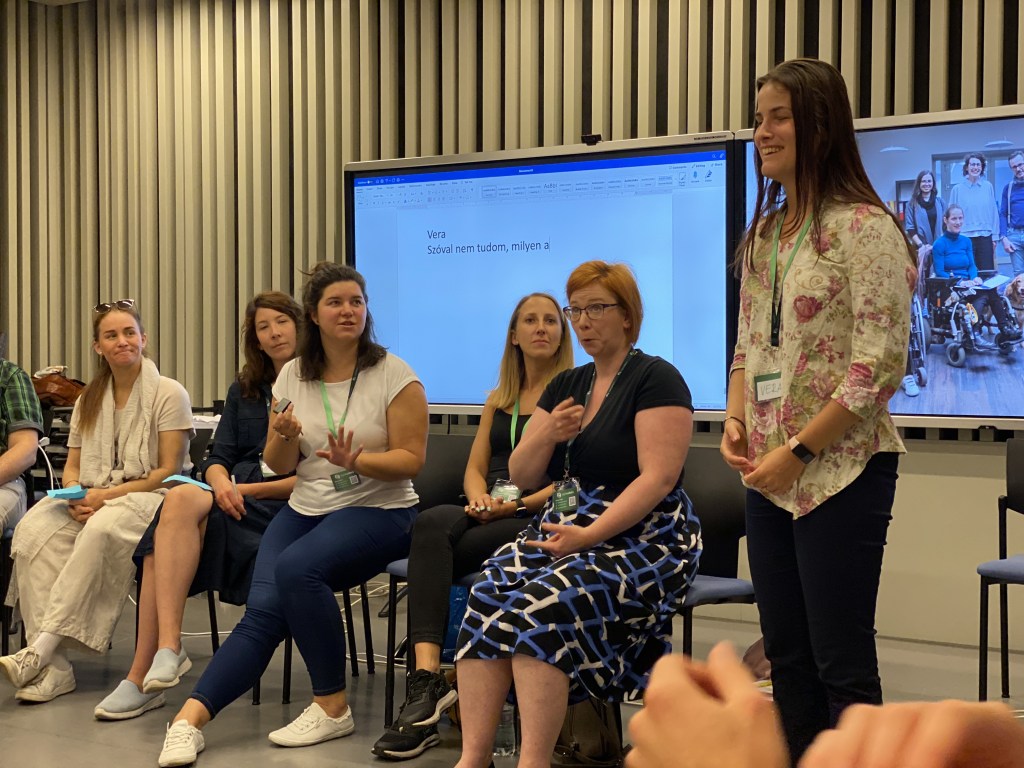
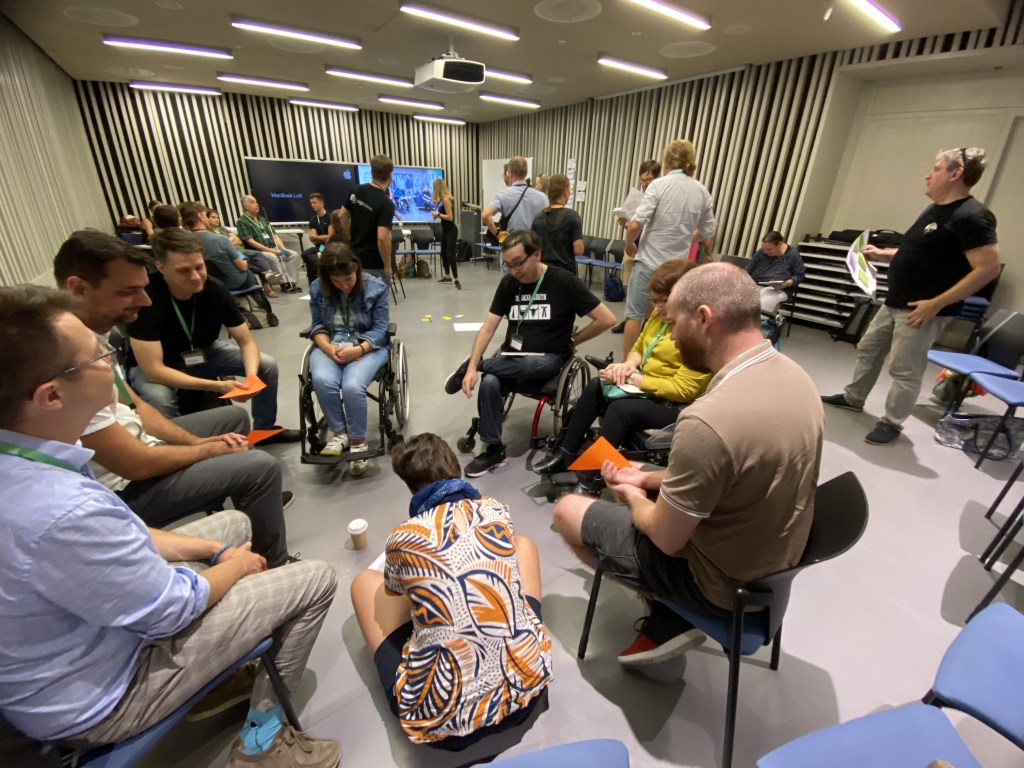
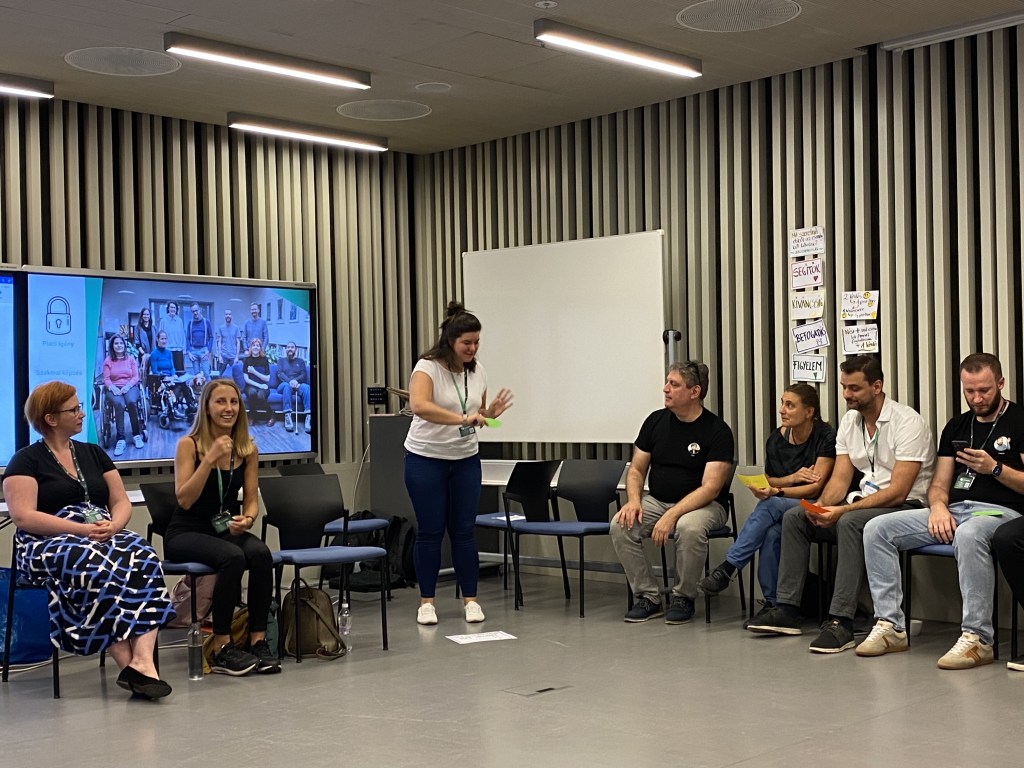
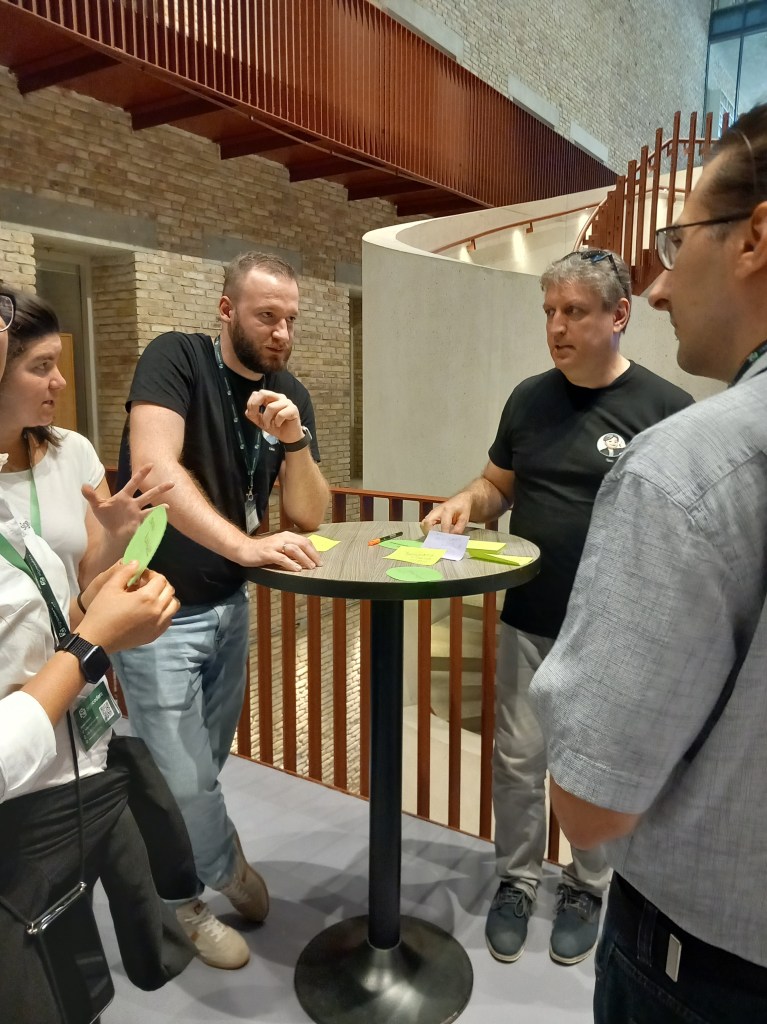
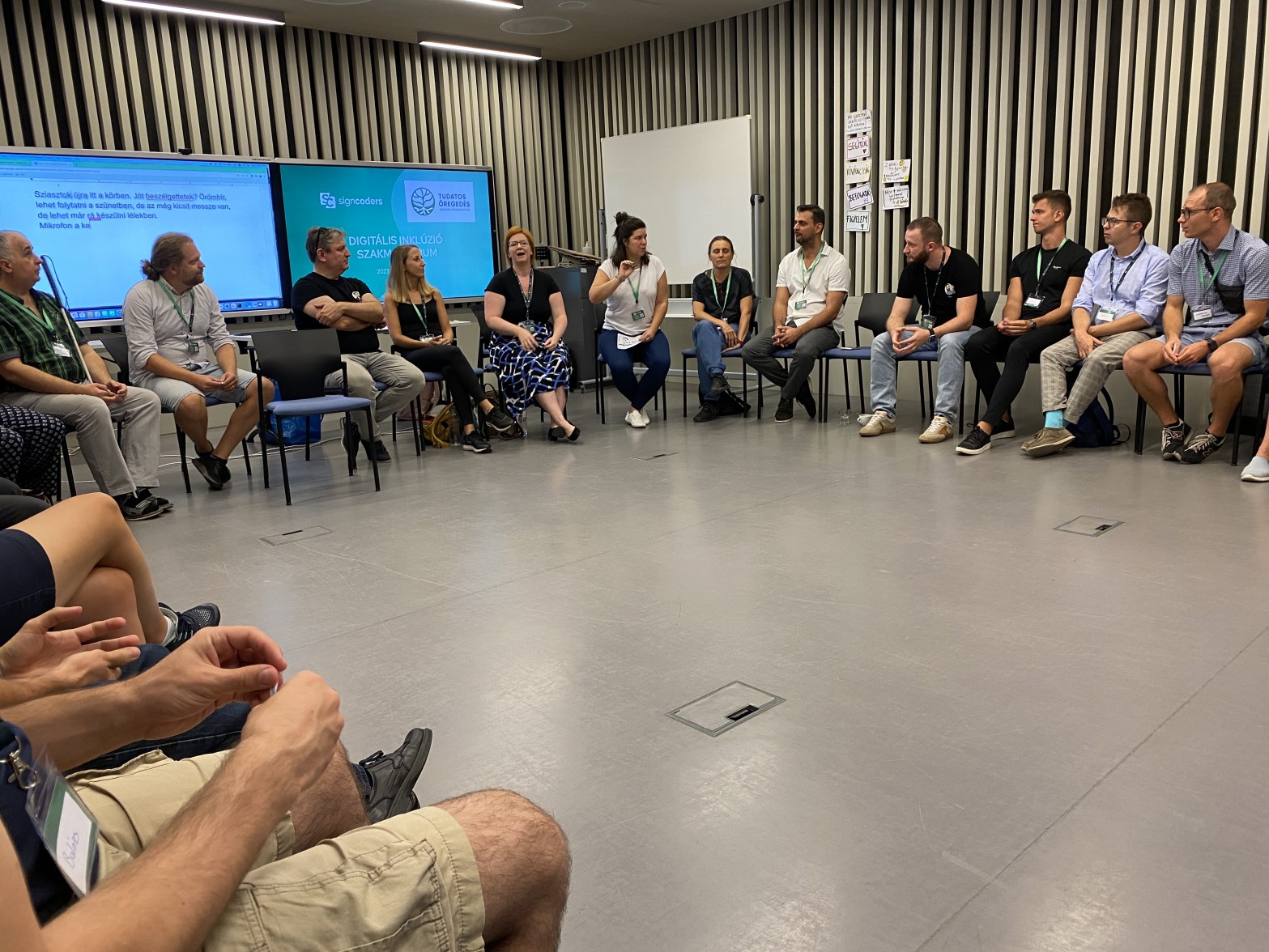
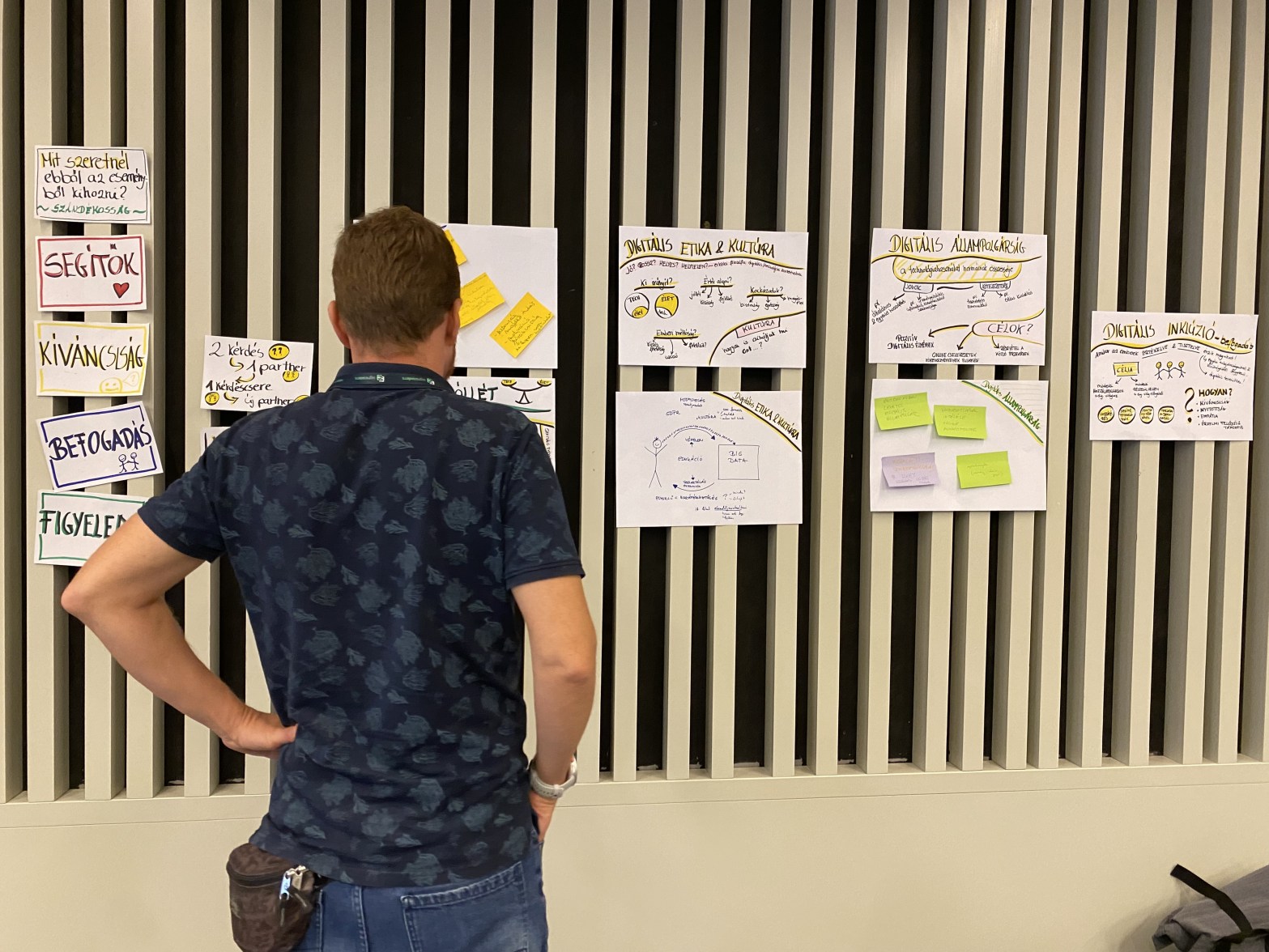
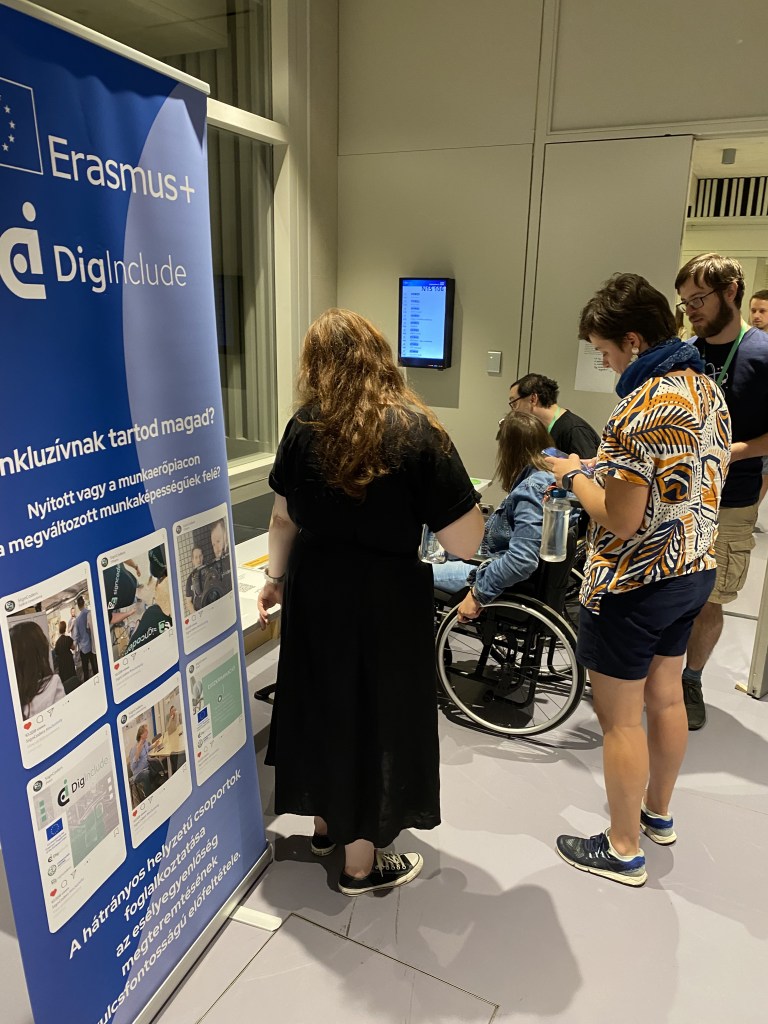
Two weeks ago we led a professional forum with two workshops in Budapest, Hungary. This was for the lovely community of one of our strategic partners, SignCoders, who we are coordinating a 2 years long Erasmus+ project, “DigInclude – Developing Digital Skills in Disadvantaged Groups” with. The topic therefore was given: Digital Inclusion. From the process of designing and implementing this event, we’ve learned a lot. Let us share with you some of these thoughts, takeaways, hints & tips.

Design is key

We knew we were going to have a very diverse group of people. From an event management and facilitation point of view this can be challenging and we could indeed feel these challenges at many steps on this journey. When we say it’s a diverse group of people, we mean differences in physical capabilities and limitations (we had deaf and hearing impaired, blind and disabled participants), differences in profile (we had CEOs, software-developers, a lawyer, a journalist, a photographer etc) and differences in interest & motivation (some people arrived out of their own personal interest, some wanted to gather tools to better lead their communities). It was crucial to understand long before the event who we are expecting to see, why they’d like to join, what their support needs are etc. Of course, a good old registration form is very helpful, however one needs to be very careful here. For us, as organizers and designers of the event, the more information we get the better are the chances to turn the event into something really valuable. At the same time, the more we ask in a registration form, the less likely people will actually complete the registration! Luckily, already our organizational team is a diverse group of people, therefore through lengthy discussions, careful listening and understanding, we could find a middle ground. In this process, careful listening to each others’ needs was really very important.

Preparation is another key

Once we knew our participants’ needs, motivation and expectation, we could start the design work. As it was indeed very diverse, there was a great risk of failing to actually take through a fully inclusive, satisfying-for-all event. What helped us through the preparation?

  • Our area of expertise in the field of training & education, years of experience with people of different emotional and mental needs, loads of non-formal education methods. Luckily we had that on hand.
  • Talking to colleagues in the same field, sharing concerns with peers and trainers working on Inclusivity. Gathering best practices.
  • Empathizing deeply with each participant and visualizing the event’s steps and processes through those lenses.
  • Researching. This Playbook for Universal Design gave us further inspiration to bring in inclusive tools.
  • Reminding ourselves: as long as we do all we can to be open and curious to listen, to empathize, to ask to clarify instead of making assumptions, and to act accordingly to our best, the event will be the most inclusive possible, even if it means not 100% inclusive. This was a very important bit to understand, as we want to make our events 120% inclusive of course! But think about it: physical limitations, profile, interest, motivation can be something to understand in advance, but we are all human and our daily physical, emotional, mental needs keep changing! We, facilitators, are also human, so we really can do only our best – which we will always do! 🙂

Make yourself at home and trust the process!

  • Safety and trust. Once at the event, the result and careful design and preparation will show. To build psychological safety and trust, it’s important in every setup, but especially with such a diverse group of people – especially at an event about Inclusion, to help the participants and supporting staff feel comfortable! As trainers, we have a responsibility in shaping the space on many levels. What can we do to make people feel welcome, seen/heard, included and important?
  • Welcome station. Let’s not go with a simple, dry registration, let’s bring in some colours and care. A small map, some reminders, a secret task can already help melting the ice and just cultivate the soil for us for trust.
  • Welcome act. As a leader or facilitator at the event, greeting people one by one might seem a long and time-consuming process – but it’s not just a pleasant but smart investment to make! A handshake, and eye-contact, some quick words could make our participants immediately feel welcome in the space!
  • Ask instead of making assumptions – and encourage participants to do the same. No matter how deeply I am able to empathize with someone, if I have not been in the same scenario, I’ll never TRULY understand what that is like – I can only imagine it. This imagination is very helpful, at the same time it’s a great soil for false assumptions, too! So careful! It’s okay to ask how we can support someone if we’re not entirely sure. It’s the same the other way around – just on the note of we’re all fallible humans – , we can help someone who’s really trying understand our needs by simply telling them what we need (instead of assuming they know).
  • Clear communication. Not always easy, since the verbal level is just one thing. But when people cannot hear you or see you, that needs adjusting. What can help? Visualizing content or writing and printing the questions in advance to help the hearing-impaired participants; arranging professional support such as sign-language interpreters; sending the event’s materials, tasks etc to the people who’ll support participants; use a special microphone for hearing-impaired.
  • Supporting staff is an incredible part of the team-work. It’s important to give them the same attention, and understand what THEY need so that they can support the event at their best. We had two brilliant sign-language interpreters and two translators with a huge challenge: mediating for long hours, with a smile on, between the trainer and the participants. Quick arrangements before the event, some clarifications on the spot, kindness and open communication helped all parties to enjoy their time and get the best out of the event.
  • Emotions are contagious. Smile, enjoy the presence, stay kind and positive – this will help others indeed to feel the same!

We also learned that with all the challenges it means to cooperate with such a diverse group of people, it’s a truly wonderful, uplifting and inspiring journey that it’s an honor to be part of!

The professional forum with workshops inspiring this article are co-funded by the European Union in the framework of our Erasmus+ project, “DigInclude – Developing Digital Skills in Disadvantaged Groups”.

Digital Wellbeing and Digital Inclusion: what’s the connection?

Two weeks ago we lead a professional forum with two workshops in Budapest, Hungary. This was for the lovely community of one of our strategic partners, SignCoders, who we are coordinating a 2 years long Erasmus+ project, “DigInclude – Developing Digital Skills in Disadvantaged Groups” with. The topic therefore was given: Digital Inclusion. However we really wanted to take a look at it from a different point of view and approach through Digital Wellbeing, a topic that we have some expertise in. We’d like to share with you how we see the connection between these two areas!

Digital Wellbeing, as you might know from a previous article of ours, “is the optimal state of health, personal fulfilment, interpersonal satisfaction and body-mind-spirit integrity that one can achieve while using technology”.

Our level of Digital Wellbeing, so the “how” of our relationship with technology defines the quality of certain areas of our lives (just like the quality of the area influences our Digital Wellbeing), which are the following:

  1. Productivity
  2. Environment
  3. Communication
  4. Relationship
  5. Mental Health
  6. Physical Health
  7. Quantified Self
  8. Digital Citizenship
This picture is from our free “Digital Readiness” online course that you can download from this article.

One of these areas, as you can see above, is Digital Citizenship. Let’s take a moment to see what that means. Digital Citizenship is the continuously developing norms of appropriate, responsible and empowered technology. It includes both the rights and responsibilities of everyone taking part of our digital world in any ways.

One of Digital Citizenship’s goals is to create positive digital experiences for self and others.

This picture is from our free “Digital Readiness” online course, that you can download from this article.

So the question arises? Is it not our own responsibility to create these positive digital experiences?

  • It’s also on us what will our digital spaces look like and how we’ll feel in the digital environment that we build.
  • It’s also on us, how we co-exist in the digital spaces and what general beliefs and customs we do practice.
  • It’s also on us what Digital Culture we create.

So what do WE want that our digital spaces look like? Kind? Fair? Transparent? Open? Accessible? Safe? We can wish for as many things as we want to, such as inclusive digital spaces (aka. Digital Inclusion). One thing is sure: whatever we’d like to see in our digital environment, we must do the work and stop for a moment to consciously design how we’ll do that. So that we stay well, so that our communities stay well. Digitally.

The professional forum with workshops inspiring this article are co-funded by the European Union in the framework of our Erasmus+ project, “DigInclude – Developing Digital Skills in Disadvantaged Groups”.

Technology: blessing or curse? 1 question, 5 opinions!

As part of our DigInclude project, we have initiated exciting club discussions, which have now become quite a tradition. Our first discussion was an introduction to the digital society, Artificial Intelligence and the changing world, with the help of four knowledgeable panellists and a moderator. In this article we want to present the general view of the panel. But first, let’s take a look at the background. 

What do we mean by digital society?

Digital age. For decades it has framed the opportunities, constraints and processes of our society. When the pandemic broke out (Covid 19), we suddenly had no choice: technology ceased to exist as a digital alternative and became an indispensable, everyday resource on which we have relied heavily ever since.

New technologies?

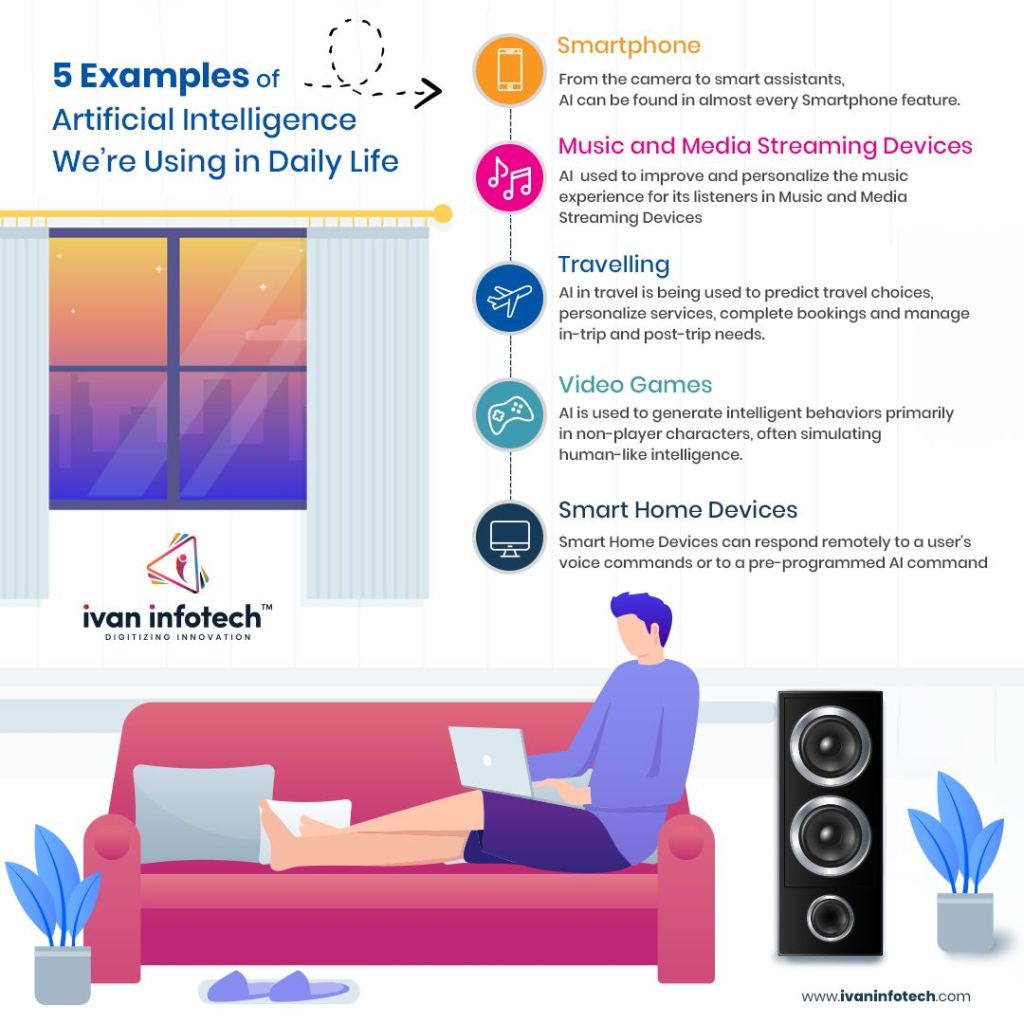
The world, our digital world, is changing quite rapidly. New technologies and digital solutions are emerging, and it’s getting harder and harder to keep up. One of the technologies that has recently caused a stir is Artificial Intelligence (AI). But what is it?  The European Parliament’s official definition of AI is: “Artificial Intelligence (AI) refers to the human-like abilities of machines, such as reasoning, learning, planning and creativity. It allows technology to sense its environment, deal with what it perceives, solve problems and plan its actions to achieve a specific goal. The computer not only receives data (already prepared or collected through its sensors, such as its camera), but also processes and reacts to it.

These systems are also capable of modifying their behaviour to some extent, by analysing the effects of their previous actions and working autonomously.” 

It’s worth pausing for a moment to think about the areas of life where we use AI – it may feel new, but it’s been with us for decades! 

Here are some of its uses:

  • Online shopping and advertising
  • For example, for some online shopping and advertising
  • Digital personal assistants
  • Machine translation
  • Smart homes, cities and infrastructure
  • Smart cars
  • Cybersecurity
  • Artificial Intelligence against Covid19
  • Fight against misinformation

As mentioned above, this is an extremely fast-growing area. ChatGPT is only a few months old, and János Levendovszky, Vice-Rector for Science and Innovation at BME (Budapest University of Technologies and Economics) and internationally recognised expert in the field of Artificial Intelligence, defines it succinctly: “ChatGPT is what everyone is talking about today.” 

According to Hekate’s enhanced definition of ChatpGPT, ChatGPT is what every individual, community and society should be talking about – because understanding it is very important to see not only its potential but also its threats. 

But to give a more professional view on this much discussed topic, we call on számoldki.hu

“ChatGPT is a language model created by OpenAI. AI-based language models learn from textual data and are able to answer questions posed by users. ChatGPT is based on the GPT (Generative Pre-trained Transformer) algorithm.”

We don’t necessarily need to understand the technological details, but it is important to remember that AI, ChatGPT and its nascent counterparts are extremely complex technologies that offer huge potential but also serious risks.

Personal opinion of the panel

We would like to present the views of the panellists – with the comment that their views may have changed to some extent since the event. We asked the following question:

What are your personal feelings and thoughts about the digital society and artificial intelligence?

We received the answers below.

Antal Károlyi – Head of SignCoders, a development company that works with young people with hearing impairments. He has been an investor and entrepreneur in the startup world for the last 10-12 years and brings experience in computer algorithm development. 

“I’m starting from where this event itself probably came from: a couple of months ago I was scared when ChatGPT came out. I started looking at it, and then, to put it in technical terms… I freaked out. Never before in the digital world had I been scared by any technology, and this was the first time that I was touched by how human it was, or at least the feeling that the tool itself gave me, how professional it was… I wrote poetry with it in English and in Hungarian and whatnot, and so it was like, okay, maybe I wrote a good poem in Hungarian, but I’m not sure in English. So I had a feeling that wow, and I have very mixed feelings about it: on the one hand I think it’s very exciting and we’re using it within the team, so we’re already taking advantage of it, but on the other hand I have a fear, which I say, I’ve never had before, of whether I can keep up cognitively and emotionally with this technology.”

Miléna Milánkovics – co-founder of Hekate Conscious Ageing Foundation. Prior to this social enterprise, she spent almost 20 years in the IT field, mainly working in corporate IT, and this interest has remained. 

“I think I’m basically very optimistic and very enthusiastic, I see this as crazy exciting. I’m a big believer in digital at the outset and I see this as a new opportunity opening up. In the meantime, I know, and my focus is there, how to do this in a way that is prepared for the downsides and that is mindful, ethical and inclusive. So that the solutions are mainly ethically sound. In the meantime, I think it raises a lot of social question marks. Today it can be a solution to many problems, for example by promoting a more impulsive health care – so I see the potential for it in many areas where it can bring good, quick and pragmatic solutions. I prefer to look at in this way. In the meantime, I sense that I have this existential fear, so in the meantime I have this fear of where the machines will be, when the algorithm will be my boss and not me. So I have this kind of cautiousness, but basically I live in this optimistic spirit: let’s see what we can use it for approach. I often look and find analogies with the “internet”, and I would like to think a little bit that if we think about this a little bit more now, and we’re a little bit more prepared in terms of the lessons of the internet, and using them, then maybe we can use this in a more ethical and fair way in the future.”

Nóra Taliga – Digital wellbeing trainer/expert. She’s strengthening the international pillar of Hekate Conscious Ageing Foundation. She works in a technical support role for an international company, so she’s in contact with end users every day, who are struggling with all sorts of systems. She also delivers training courses internationally, with a focus on digital wellbeing.

“I guess I’m less optimistic… I don’t have a huge pessimism about the whole thing, but I have very mixed feelings, I’ll be honest. And I’m not just talking about Artificial Intelligence here, but as a digital society in principle, as just a starting topic. I think that it is not a black and white story, that there are a lot of good things about technology and a lot of bad things. I am obviously talking here about the many advantages that we enjoy every day… I am thinking here, for example, of the fact that we can break down national borders by living in a digital society, that the labour market is opening up, and that there is actually a huge store of knowledge and information available to everyone – in theory. There is Artificial Intelligence as an opportunity, with a huge potential to develop a lot of areas, for example medicine, diagnostics, where we are already applying them. Which is a brilliant thing, so that part of it obviously excites me and gives me hope and that’s the optimistic side of it. And then there’s the side that there are a lot of dangers and a lot of disadvantages that technology can bring. And then obviously I’m considering how accessible it really is for everyone. So it’s one thing that it’s there, but can everyone really take advantage of it? Do we have the competence to really use this digital society? Obviously the whole story raises questions about where the power is in all this. So it’s in what hands XY technology is in that determines what the product itself is. At least that is my personal opinion. And then that’s something that can generate a lot of other things, can generate that, and what we see every day is that there are divisions, social divisions, that there are social barriers, that there is polarization, that there is really not everybody having access to the internet… So yes, there are a lot of dangers, and so I experience it more as a kind of strong fear.”

Levente Pártovics – IT specialist, cloud solution architect.He has worked for 27 years in the IT field at Stephens Luxembourg in various positions, including software developer. He is currently working on the design of cloud-based systems. Artificial Intelligence is not his area of expertise, just a frontier he sometimes encounters in his work.

“I would also like to relate a little bit to Antal and Nora. I have mixed feelings about it, so from a professional point of view it’s an incredibly exciting area, both in the digital society and in the field of Artificial Intelligence. If you look at how much it has developed over the last 30 or 40 years and how it has been integrated into our lives, I think it is a fantastic thing and it has a lot of potential. We have talked about a lot of the dangers in the digital society area. Again, I would not go into it in depth, but I would highlight two things. The thing that has been happening so far is that our virtual identity is coming to the fore instead of our real identity, and this illusory identity is becoming important. The other is the mass manipulation that we saw, for example, in the US elections, how many millions of people could be ‘surprised’ by social media – that’s the negative side of the digital society. As far as Artificial Intelligence is concerned, you can look back over the last 20 years, where you can see how it has developed. Huge opportunities – as has been said – this could be a lot of things. I see two areas here that are, let’s say, more on the negative side: one is that deep learning technology is coming to the fore, where people have less and less control over exactly how this knowledge is incorporated into Artificial Intelligence, so it’s very difficult to control what comes out of it. The other thing is that I’m not afraid to use AI: I’m afraid of the people who get their hands on AI as a technology, what do they do with it? So I’m thinking a little bit about nuclear power as an analogy, again it could be used for nuclear power plants and nuclear bomb making, and well I have a moderate amount of faith in human wisdom, as we’ve seen over the last few decades, the negative side has come out quite strongly, so both of these things I really have this mixed, a lot of positives and a lot of strong negatives that I see about them.”

Kinga Milánkovics – Co-founder of Conscious Ageing. She has a “pig-like” approach to IT: she was involved in the installation of one of the first web servers at the University of Gödöllő (Hungary), and was a system administrator at the Tempus Public Foundation for 20 years. He has an affinity with the subject, but has moved into a different field: she works on ageing and community development: she is very interested in digital solutions, how those can help individuals and communities, and what this can mean for elderly care (as she is an elderly care worker herself).

“I’m a community developer, I would say now on a personal note how I feel about it, what I think. Back when I started my job, there was no social media, it was really just email we had. So it’s an absolute revelation to me on a daily basis how much we have tools that allow us to work on a whole different level, a whole different level of effectiveness than we used to, and I still love it to this day. As regards the dangers you mentioned, I agree completely, on the one hand, and on the other, I have become quite fatalistic over the last ten years, so I think that this genie is now completely out of the bottle. I have some anxieties about that, but I’m more like, there’s not that much we can do about it now. I think, I do not think I am right, because I am not an IT specialist, but I have this “let it go a little” on a feeling level, and what has started to interest me in connection with this is exactly what Levente said, about the power that will be in the hands of which people. The question of what kind of exit strategy we need to prepare. I really like all these new technologies and applications and everything, but I’m increasingly concerned about how you can chose to stay out of all this, and – which was the idea behind this event – whether you’re left out.  Where can this be, even as an ageing person – and this is even more interesting from the point of view of young people, because they are likely to have more time ahead of them – but how can a 50-60-70 year old person determine their presence in the digital space, or what applications they should or are willing to learn, what are important. This is a topic that I’m very interested in, how to calibrate that for myself so that if it gets into the hands of very bad people and it becomes very controlling, then what kind of digital-free life can you live at all in terms of opting out. These are issues that I’m very concerned about.”

What do YOU think? Is technology a blessing or a curse? What are YOUR personal feelings and thoughts about the digital society and Artificial Intelligence? We encourage you to do some reflecting. We’d love to hear what you come up with! 🙂 

The club discussion that inspired this article was co-funded by the European Union in the framework of our Erasmus+ project, “DigInclude – Developing Digital Skills in Disadvantaged Groups”.

Would you like robots to care for and look after you in your old age?

That is one of the questions that often arises in our communities.

Yes? Why? No? Why not? Nursing and caring robots…?! Is this a curse or a blessing?

Let’s think about this together a bit!

Sophia, the humanoid robot, which the Hong Kong company Hanson Robotics promised to start mass-producing in 2021, can provide elderly care…? The mass production of the elderly care humanoid robot begins…??

I would say: „Thank goodness!”Continue reading “Would you like robots to care for and look after you in your old age?”